-
 The survey, partly led by East Carolina University, found a 'disturbing' amount of non-native species at marinas from Virginia to New Jersey.
 -
 Officials are asking residents to keep an eye out for Elm zigzag sawflies across the state.
 -
 They tear up planted fields, wallowing out huge bare depressions. They out-eat deer and turkeys — and also eat turkey eggs and even fawns. They carry parasites and disease and pollute streams and rivers with their feces.
 -
 Lake Mattamuskeet is infested with an invasive species that has destroyed underwater grasses and decreased water quality.
 -
 What do you do when you’re stuck at home during pandemic lockdown with thousands of mosquitoes to keep you company? You feed them. The hard way.
 -
Iguanas didn’t always fall out of trees during cold snaps in the Sunshine State, but chances are, future generations will regard them as just a natural part of the landscape. With the world changing around us at a rapidly increasing rate, how do we set conservation goals when we can't keep track of what we’ve lost?
-
The exotic pet industry is one of the main pathways for introducing invasive species into new environments. It can be hard for non-herpers to understand what’s so attractive about living with these creatures. In this first of a series of bite-sized episodes, reptile enthusiast Tim Jackowicz takes us into his world, where giant snakes and lizards offer an opportunity to rethink how we approach the world around us.
-
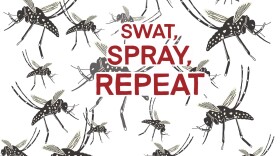 As if our native mosquitoes weren’t pesky enough, we humans have imported some of the most invasive mosquito species to the U.S., bringing with them painful and debilitating diseases. Is there a human solution to this human-caused problem? Or are we destined to see history repeat itself, as we try (again and again) to outwit the deadliest animal on the planet?
 -
 Worst. Marine. Invasion. Ever. Prized as pets for their mesmerizing beauty, an aquarium keeper’s dream has become an environmental nightmare as legions of venomous, voracious lionfish are now guzzling up fish and further endangering coral reefs throughout the Atlantic, Caribbean and Gulf of Mexico. Researchers, inventors, divers and fishers are urgently trying to find new ways to stem the tide of these undersea marauders.
 -
 Beyond the hype about Pablo Escobar’s cocaine hippos, the real story of what’s happening in Colombia’s Rio Magdalena is surprising and complex. Some look on these hungry herbivores with affection and admiration, others fear their aggressive attitude and huge ecological footprint. Follow these unlikely invaders from Africa to Colombia with a possible layover in…Louisiana?

Bringing The World Home To You
© 2024 WUNC North Carolina Public Radio
120 Friday Center Dr
Chapel Hill, NC 27517
919.445.9150 | 800.962.9862
© 2024 WUNC North Carolina Public Radio
120 Friday Center Dr
Chapel Hill, NC 27517
919.445.9150 | 800.962.9862
91.5 Chapel Hill 88.9 Manteo 90.9 Rocky Mount
91.1 Welcome 91.9 Fayetteville 90.5 Buxton
94.1 Lumberton 99.9 Southern Pines 89.9 Chadbourn
Play Live Radio
Next Up:
0:00
0:00
Available On Air Stations


